Novels that retell classic Doom and Doom 3 from a marine's view
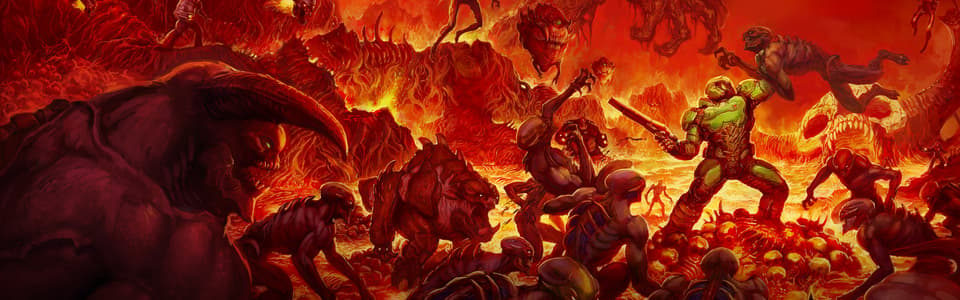
id Software's shooter series has been sending one marine against the armies of Hell since 1993. The classic games (Doom, Doom II and Doom 64) put a nameless marine on the UAC's Mars bases and then on a ruined Earth. Doom 3 retold that invasion as a horror game in 2004. The modern series, from Doom (2016) through Eternal and The Dark Ages, follows the Doom Slayer and has the most story of any of them.
The books are all tie-ins to the older games. Dafydd ab Hugh and Brad Linaweaver's four Pocket Books novels from 1995 and 1996 give the marine a name, Flynn Taggart, and start out following Doom and Doom II before heading off on their own. Matthew J. Costello, who wrote Doom 3's story, wrote two novels retelling it. Nothing has been published for the modern games.
You don't need any of the books to follow the games. If you want one, read Doom 3: Worlds on Fire after Doom 3, or Knee-Deep in the Dead after the first game if you're in the mood for pulp.
Best experience
Play the games in release order and read each book after the game it retells. The 1995 novels loosely follow Doom and Doom II, so Knee-Deep in the Dead goes after the first game and Hell on Earth after the second. Costello's two Doom 3 novels sit after Doom 3 and before its expansion, Resurrection of Evil. The last two Pocket Books novels, Infernal Sky and Endgame, stay out, because by then the series has gone off into its own science fiction story. No books cover the modern games, so from Doom (2016) on it's games only, with The Dark Ages and Revelations last, as they came out.
You're a Marine shipped to Mars after hitting a superior officer who ordered your unit to fire on civilians. The Union Aerospace Corporation has been running teleport experiments between Phobos and Deimos, Mars's two moons, and now Deimos has vanished and something is coming through the gates on Phobos. Your unit goes in. You're left guarding the perimeter, and then the radio goes quiet.
Corporal Flynn "Fly" Taggart's Marine company is sent to Phobos after the UAC base there goes silent. Fly ends up fighting his way through the base against zombies made from his own comrades and worse, alongside fellow Marine Arlene Sanders. The first of four novels by Dafydd ab Hugh and Brad Linaweaver, published less than two years after the original game.
What this adds
This is the one people mean when they say the Doom novels are worth a laugh, and PC Gamer singled it out as the only one worth bothering with. It follows the first game's shape, Phobos first and then Deimos, with the weapons and monsters you remember turned into a Marine's-eye action story. Fly gives the silent marine a voice and a running internal commentary. It's pulpy, very 1995 and fast to read. The later books drift away from the games, so if you only read one, read this.
The marine is back on Earth after Mars, and finds the invasion got here first. Most of the planet's people are dead or worse. The survivors are trying to get off the planet on ships from the last working starport, but demons have taken the area around it, and somebody has to clear the way before anyone can leave.
Straight after the first book, Fly and Arlene are stranded on Deimos with the air leaking out. When they finally get back to Earth, they find the invasion got there first. They come down near Salt Lake City, one of the few places still holding out, and start looking for a way to fight back across a country the monsters mostly own.
What this adds
The first stretch keeps close to Doom II's idea: the marine comes home to an Earth that's already lost and has to fight through it. After that it builds its own story, with human factions, politics and its own take on who's behind the invasion, none of which the games follow. The action is still fun, but you'll recognize far less of Doom II here than you did of Doom in the first book. Read it if you enjoyed that one and want more Fly and Arlene.
Some time after Doom II, the UAC's abandoned bases sit under quarantine. Something left behind there has survived, and it's been using the bases' radiation to bring the dead demons back to life. One marine is sent back in, alone, to stop it before the horde is rebuilt. The tone is darker and quieter than the first two games.
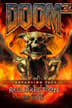
In 2145, a Marine corporal arrives at Mars City, the UAC's research base on Mars, as rumors spread about the experiments in Delta Labs. Dr. Malcolm Betruger runs those labs, and plenty of the staff are scared of what goes on there. The marine's first job is to find a missing scientist. Before long the base is a very different place.
After Doom 3, before the Resurrection of Evil expansion
It's 2144, and a century of fighting over Earth's resources has left the Union Aerospace Corporation with a free hand on Mars. John Kane, a special-ops Marine busted down to private for disobeying an order, is reassigned to the UAC's Space Marines and shipped to Mars City. Near the base, scientists are studying ancient ruins and a relic they've nicknamed the Soul Cube.
What this adds
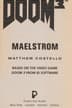
Matthew J. Costello wrote Doom 3's story, and here he gets to spend time on what the game rushes past: Mars City before things go wrong, the people working there, and the corporate politics behind the Delta Labs experiments. The silent marine becomes John Kane, with a past on Earth and a squad around him. It's a loose retelling with changes and characters the game doesn't have, and it stops before the game's story is done. Maelstrom finishes it. If Doom 3's slow, creepy first hours were your favorite part, this is the Doom book for you.
Two days before the first outbreak, scientists at the UAC's undersea Ballard lab on Earth are studying a bacterium that survives where nothing else can, and worrying their funding is about to go to Mars. On Mars, once the outbreak hits, John Kane and a handful of survivors fight their way through Mars City while the people running the UAC chase plans of their own.
What this adds
This one carries Kane through the rest of Doom 3's story, and much of it will be familiar from the game: Mars City falling apart, the push toward Delta Labs, the Soul Cube. What's new is the Earth side, with the Ballard lab and the Kelliher family who run the UAC, which was clearly meant to pay off in a third book. That book never came out, so the Ballard thread is left hanging. Read it if Worlds on Fire left you wanting the ending.
It's 2147, two years after Doom 3, and the UAC is back on Mars. An expedition picks up a strange signal from an ancient dig site, and a Marine sent down with the team finds an artifact buried there. Picking it up wakes something, and the demons are soon back in the base.
The Doom Slayer wakes up chained to a stone slab in a UAC research facility on Mars that Hell has overrun. Samuel Hayden, the man in charge, wants his help closing the portal the company opened, and VEGA, the base's AI, talks him through the wreckage. The Slayer mostly wants to kill demons, and the game rarely makes him wait.
Earth has fallen to Hell, and most of humanity is gone. The Slayer comes back from orbit in his base, the Fortress of Doom, with one plan: kill the three Hell Priests leading the invasion. What's left of the human resistance helps where it can. Everything else between him and the priests has teeth.
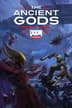
Picks up right after Doom Eternal's campaign. Saving Earth came at a price, and the Slayer has to deal with what his victory set loose on the other worlds he fought across. It's a short campaign of three new levels, built for people who've finished the main game and want harder fights.
The second half of The Ancient Gods, carrying on directly from Part One. The Slayer goes after the power behind the whole invasion, through new worlds and some of the hardest fights in the modern games. Like Part One, it's a set of new levels rather than a full game, and it assumes you've played everything before it.
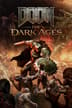
Long before the 2016 game, the Slayer is the Maykrs' weapon on Argent D'Nur, a world at war with Hell. Prince Ahzrak leads Hell's armies against the Night Sentinels, the knights who defend it, and the Slayer is sent wherever the line is breaking. It's a medieval spin on Doom, with a shield saw, a flail and a cybernetic dragon to ride.
Set after The Dark Ages' campaign, in the long stretch before the 2016 game. The Slayer is brought low and thrown into a purgatory inside his own mind, stripped of his armor. A stranger called the Architect offers a way out, and the Slayer has to rebuild his gear and face his past to escape. It's six levels and a new weapon, the Chain Spear.