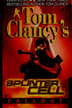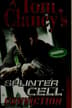
The novels fill the gaps between Sam Fisher's missions.
Sam Fisher works for Third Echelon, a secret NSA unit that sends a single operative into places the United States can't officially go. Ubisoft made six main games between 2002 and 2013, from the original Splinter Cell to Blacklist, plus the PSP spin-off Essentials. There hasn't been a new game since, though a remake of the first one is in development.
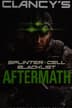
The books are side stories. Raymond Benson, Grant Blackwood and Peter Telep wrote the first six novels under the house name David Michaels, each one an extra mission or a look at the gap between two games. The Echoes graphic novel bridges Conviction and Blacklist. After that, Telep's Blacklist Aftermath and James Swallow's Firewall and Dragonfire carry Sam's story past the last game, with his daughter Sarah working beside him.
Start with the games. If you've finished Blacklist and want more Sam, read Firewall. For the years Sam spent on the run before Conviction, try Telep's Conviction novel.
Best experience
The games go in release order, except Essentials, which moves after Double Agent because that's when its story is set. Each book sits after the game it's best read with. Benson's two novels follow the first game, and Blackwood's two standalone missions follow Chaos Theory. Telep's pair about Sam on the run comes between Double Agent and Conviction, Echoes leads into Blacklist, and the three newest novels come last, since they continue Sam's story after the final game. If you're short on time, read the Conviction novel, Echoes and Firewall.
It's 2004, and the NSA's secret Third Echelon division sends Sam Fisher, a veteran recruited back into the field, to find two CIA officers who've gone missing in Georgia. Irving Lambert runs the operation and Anna Grímsdóttir handles the technical side. What starts as a search for two missing men turns into a hunt for whoever is behind a wave of cyberattacks on the West.
Someone is killing Third Echelon's Splinter Cells, and Sam Fisher is sent to find out how their killers knew who they were. The trail runs from Macau and Iraq to the Shop, an arms-dealing ring that sells to anyone with money, and to the Shadows, an Iranian group whose leader, Nasir Tarighian, has his own plans for Baghdad.
What this adds
Raymond Benson, who wrote the official James Bond novels for several years, tells Sam's chapters in the first person, and that voice is the best reason to read this. You get the dry humor of the games' radio chatter, Lambert running things from Fort Meade, and a fuller look at how Third Echelon handles its field agents. Otherwise it's a straightforward airport thriller. It was published under the house name David Michaels, so that's the name on the cover.
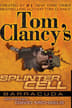
About a year on, Third Echelon is still hunting the Shop and still trying to work out how the arms dealers learned its agents' names. Then a German-born weapons scientist who designed a new submarine drone for the US Navy turns up dead in Hong Kong, and Sam goes after the Lucky Dragons triad. At home, for once, he's trying to make a relationship work.
What this adds
This is the second half of Benson's story, so read it straight after the first novel. It ties off the leak plot the first book leaves open, brings Grim back into the picture, and gives Sam a life outside work, which the games rarely bother with. The plot gets bigger and more far-fetched than anything in the games. None of it matters for the games themselves; it's for when you want more of Benson's first-person Sam.
In 2006, Indonesian guerrillas led by Suhadi Sadono storm the US embassy in Dili, East Timor, and Sam is sent in while the building is still under siege. Sadono's grudge is against the American military advisers in Indonesia, and Third Echelon soon learns his threat reaches well beyond Southeast Asia. Lambert, Grim and field runner Frances Coen back Sam up.
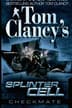
It's 2007, and Japan's new information warfare force has East Asia on edge as tensions with China and North Korea climb. Sam's first job is to pull computer engineer Bruce Morgenholt out of the hands of Peruvian separatists before his work on the Masse algorithms leaks. The trail runs through a Panamanian freighter, a Manhattan bank and a private military company called Displace International.
Sam is called in from a training exercise to stop the freighter Trego before it reaches the United States with a deadly cargo. Soon after, a radiological attack hits Slipstone, a small town in New Mexico, and the hunt for the people behind it takes him through Ukraine, Dubai, Iran and Turkmenistan, with Lambert and Grim running things from Fort Meade.
What this adds
Grant Blackwood took over the David Michaels name here and changed the approach: third person instead of Sam's voice, and none of Benson's running threads. What's left is a standalone Third Echelon mission in the Clancy technothriller mold, with Lambert, Grim and plenty of the games' gear (the SC-20K, the OPSAT, the goggles). On paper it's set before the first game, but nothing in it depends on that. Read it if you want another mission and skip it if you don't.
Sam is in San Francisco for a joint training exercise with the CIA when Lambert calls him back to Maryland: his estranged brother has been found barely alive off the coast of Greenland, poisoned by a plutonium compound. The search for who did it leads to Kyrgyz fundamentalists who have seized their country's government, and to a plan aimed at the world's oil.
What this adds
Blackwood's second book is the more personal of his two, since it starts with family, something the games save for Sarah. It's again a standalone mission with Lambert in charge, set before Double Agent turns Sam's life over, and it ranges from Montreal and Cape Breton to Kenya and North Korea. Like Checkmate, it adds little to the games' story. Think of it as an extra mission between Chaos Theory and Double Agent.
Sam's daughter Sarah has just been killed by a drunk driver, and he takes the job nobody else wants: pose as a convict, break out of Ellsworth Federal Penitentiary alongside a member of John Brown's Army, and go undercover inside the domestic terror group. A trust meter weighs what the NSA wants against what the JBA needs to see. The Xbox 360, PS3 and PC version differs a lot from the one made for older consoles.
In January 2009, a year after the events of Double Agent, Sam is arrested at his daughter's grave in Washington and questioned by the NSA. As he talks, the game plays his memories as missions, from a solo rescue in Colombia during his Navy SEAL years in 1992 to operations from across his Third Echelon career. It's a PSP spin-off, released before Double Agent but set after it.
After Double Agent, Sam has left Third Echelon and is living on the run, branded a traitor and quietly working with Grim to expose the moles inside the NSA. Third Echelon sends a team of new Splinter Cells after him, led by a young agent named Ben Hansen, and the chase moves between the hunted man and the people hunting him.
What this adds
Despite the title, this isn't the game's story. It covers part of the gap between Double Agent and Conviction, which the games skip, and shows Sam as a hunted man before he turns up in Malta. Peter Telep, writing as David Michaels, builds it as a chase with chapters from both sides. It's the most useful of the older novels if you want to know what Sam did in those years, though the game never mentions it.
The hunt for Sam Fisher, told from the other side. Ben Hansen and his squad of new Splinter Cells are the leads now, and the book follows their orders and their pursuit of the most dangerous man Third Echelon ever trained, covering the same events as the Conviction novel and carrying on past them.
What this adds
A companion piece rather than a sequel: much of it replays scenes from the Conviction novel through Hansen's eyes, and a few of those conversations don't match the first book word for word. If the hunters interested you more than the hunted, it fills them out and takes the story further. If not, you can stop after the Conviction novel and miss nothing the games need.
Sam has walked away from Third Echelon and is in Malta, chasing the man he believes killed his daughter. Then his old colleague Anna Grímsdóttir gets in touch with a warning and an offer of help, and his private search turns into something that reaches back to Washington. Vic Coste, Sam's friend from his SEAL days, tells the story, and faster Mark and Execute takedowns replace much of the old slow stealth.
Sam is retired and living in Virginia when Vic Coste, his old SEAL friend, asks for help with a security job in South America. It goes wrong, and soon Sam is tracking a terrorist group called KROWE from a Spanish cruise liner to Georgia, while his old colleague Grim tells him to stay out of it.
What this adds
Ubisoft Toronto worked with Nathan Edmondson and artist Marc Laming on this as the bridge between Conviction and Blacklist, and it does that job. You see where Conviction left Sam, Vic Coste's private security firm at work, and the first thread of the trail that leads to Blacklist. It's short, about a hundred pages. It first came in Blacklist's Collector's Edition; Dynamite's 2014 trade paperback is the edition you can buy now.
A group calling itself the Engineers attacks Andersen Air Force Base in Guam and announces the Blacklist, a countdown of strikes on American targets unless the United States pulls its troops out of foreign countries. President Patricia Caldwell answers by creating Fourth Echelon and putting Sam in charge, with Grim, hacker Charlie Cole and Isaac Briggs working from the Paladin aircraft.
Igor Kasperov, an eccentric Russian billionaire who runs one of the world's biggest anti-virus companies, is ordered by the Kremlin to unleash a computer virus on the United States. He refuses and runs. Sam and Fourth Echelon have to find him first and deliver the President's offer of asylum, because the others looking for him only want him dead.
What this adds
The direct follow-up to Blacklist: Sam is running Fourth Echelon, the unit the game set up, and this is its next job. Peter Telep wrote it under his own name, and it reads like another operation you didn't get to play, with Russia as the opponent. It doesn't change anything about the games, but it's the closest thing there is to more Blacklist.
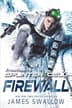
A couple of years after Blacklist, Sam is recruiting and training the next generation of Splinter Cells for Fourth Echelon, his daughter Sarah among them. Then an assassin from his past turns up alive, and the two of them are pulled into a race to stop Gordian Sword, a cyberweapon that can crash airliners and black out cities, from being sold to the highest bidder.
What this adds
This is where Sam's story goes now that the games have stopped. James Swallow, who also wrote two Deus Ex novels, puts Sarah in the field beside her father, something the games never did, and their working relationship drives the book. Grim is back too. If you read only one Splinter Cell book after Blacklist, make it this one. There's also a BBC full-cast radio version of the same story.
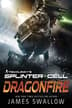
A stealth mission inside North Korea goes wrong, and Sam finds himself cut off, disavowed by Fourth Echelon and hunted. A world away, his daughter Sarah is fighting her own side to find her missing father, while a group of conspirators known as the Dragons pushes the two Koreas toward open war.
What this adds
Swallow's second book splits Sam and Sarah up, which gives you two stories. Sam surviving alone behind enemy lines is the closest the books get to the feel of a Splinter Cell mission, and Sarah's half, inside the team, gives Isaac Briggs from Blacklist a bigger part. Read Firewall first, since this builds on where it leaves the two of them. It's the most recent Splinter Cell novel.